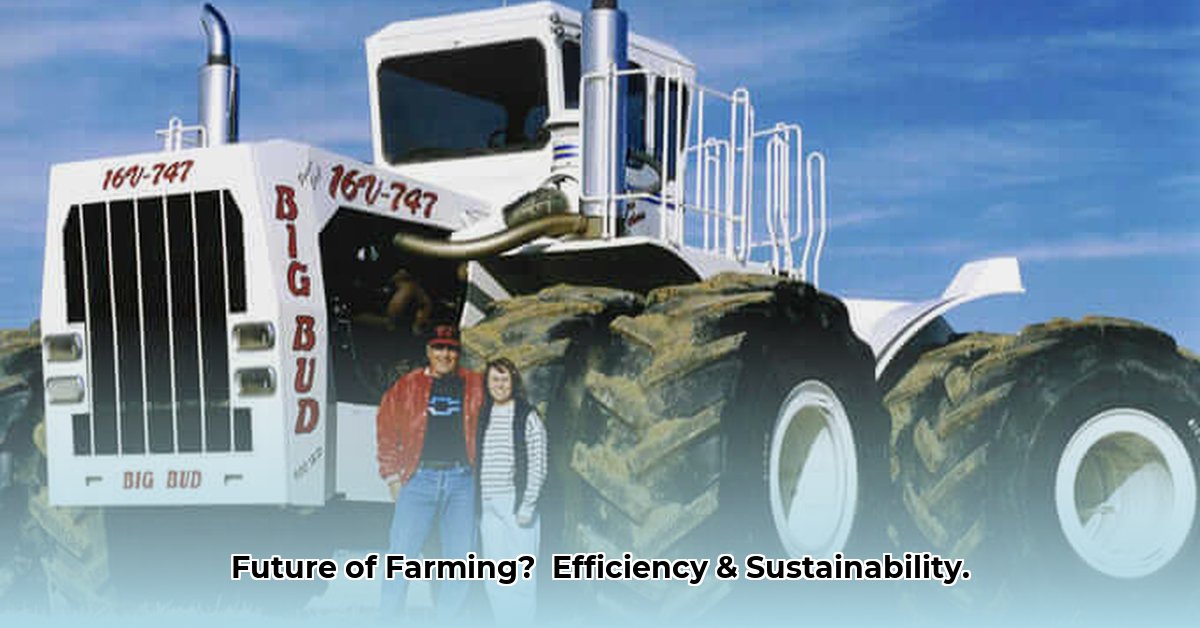
Big Farm Tractors: A Double-Edged Sword for Sustainable Agriculture
Large farm tractors have revolutionized agriculture, dramatically increasing efficiency and crop yields. However, their heavy reliance on fossil fuels and potential for soil compaction present significant environmental challenges. This article analyzes the complexities of integrating large tractors into sustainable farming systems, exploring both advantages and disadvantages, and providing actionable strategies for mitigation. The goal is to navigate the delicate balance between maximizing agricultural output and minimizing environmental impact. We’ll examine strategies like Controlled Traffic Farming (CTF), cover cropping, and policy interventions to ensure a sustainable future for agriculture. For more information on the costs associated with large-scale farming, check out this resource on tractor pricing.
The Power and the Peril: Efficiency vs. Environmental Impact
Big tractors offer undeniable advantages. GPS-guided planting and automated steering minimize waste, increase precision, and reduce fuel consumption compared to older models. These technologies translate to significant cost savings and increased profitability for farms. Furthermore, fewer laborers are needed to cultivate large areas, addressing labor shortages in some regions. However, this efficiency comes at a cost. High fuel consumption contributes to greenhouse gas emissions and climate change. The weight of these machines compacts soil, reducing water infiltration, nutrient uptake, and long-term soil health. This soil compaction can negatively impact crop yields, directly counteracting the initial efficiency gains.
Isn't there a way to leverage the benefits of large tractors without incurring such substantial environmental costs? The answer lies in adopting sustainable farming practices alongside technological advancements.
Mitigating the Environmental Footprint: Practical Strategies
The challenge lies in finding innovative solutions that reconcile the need for increased agricultural productivity with the imperative to protect the environment. Two key strategies stand out:
Controlled Traffic Farming (CTF): This method involves designating permanent wheel tracks for all machinery, leaving the rest of the field undisturbed. This minimizes soil compaction, promotes better water infiltration, and enhances overall soil health. While CTF requires investment in GPS-guided machinery, the long-term benefits in terms of reduced compaction and improved yields can be substantial. However, detailed, long-term studies are still needed to definitively quantify these benefits across various soil types and climatic conditions.
Cover Cropping: Planting cover crops between cash crops helps to break up compacted soil with their extensive root systems, improving soil structure and water retention. Careful selection of cover crop species is crucial, tailoring choices to the local climate and soil type. Effective cover crop management (planting and termination) is also essential for optimal results. Further research is needed to determine the long-term effects of different cover crop species and management strategies on soil health, crop yields, and water use efficiency.
Quantifiable evidence suggests that the combined implementation of CTF and cover cropping can significantly reduce soil compaction and enhance overall soil health. A holistic approach, integrating these practices, offers a powerful means of mitigating the environmental impact of large tractors.
The Role of Policy and Collaboration
Addressing the sustainability challenges associated with large tractors requires a multifaceted approach that includes both technological advancements and policy interventions.
Dr. Anya Sharma, Professor of Agricultural Engineering at Cornell University, notes: "The future of sustainable agriculture hinges on a collaborative effort between researchers, policymakers, farmers, and equipment manufacturers. We need incentives for farmers to adopt sustainable practices like CTF and cover cropping, along with continued investment in research to optimize these techniques and develop alternative power sources for agricultural machinery."
Actionable steps towards sustainable tractor use include:
Investing in Research and Development: Continued research into fuel-efficient technologies, alternative fuels (biofuels, electric), and precision farming techniques is crucial.
Policy Support and Incentives: Government programs offering financial incentives and technical assistance for adopting sustainable practices can encourage wider adoption of CTF and cover cropping.
Education and Training: Providing farmers with the knowledge and skills necessary to effectively implement sustainable farming practices is essential.
Collaborative Partnerships: Fostering collaboration between farmers, researchers, policymakers, and equipment manufacturers will lead to innovative and effective solutions.
Conclusion: A Sustainable Future for Agriculture
Large farm tractors remain indispensable tools for modern agriculture. However, their environmental impact necessitates a paradigm shift towards sustainable farming practices. By combining technological advancements with strategic policy interventions and collaborative efforts, we can harness the productivity of large tractors while minimizing their environmental footprint, ensuring a sustainable future for agriculture and food security for generations to come. Further research and data-driven assessments are essential to refine these strategies and optimize their long-term effectiveness.